Video Wall or LED Screen?
When a project calls for a large digital display surface, two options usually come up: a video wall or an LED screen. At first glance they do the same job — create a large viewing surface, play video and imagery, and deliver visual impact in a corporate space. In practice they differ significantly in technical structure, image continuity, brightness, viewing distance and usage scenario. Choose wrongly and the problem is not only image quality: maintenance costs can rise, content may not land as expected, or the screen may never sit comfortably in the architecture. The right question is not “which is better?” but “which is right for this project?”.
What Is a Video Wall?
A video wall is a large display system built by placing several professional screens side by side and on top of each other. These panels are usually LCD and can be driven as one large image through a controller. Video walls are common in control rooms, meeting rooms, security operations centres, corporate lobbies and data monitoring areas. Their defining characteristic is that they are physically made of multiple panels, so a bezel or seam line is visible between them to some degree.
What Is an LED Screen?
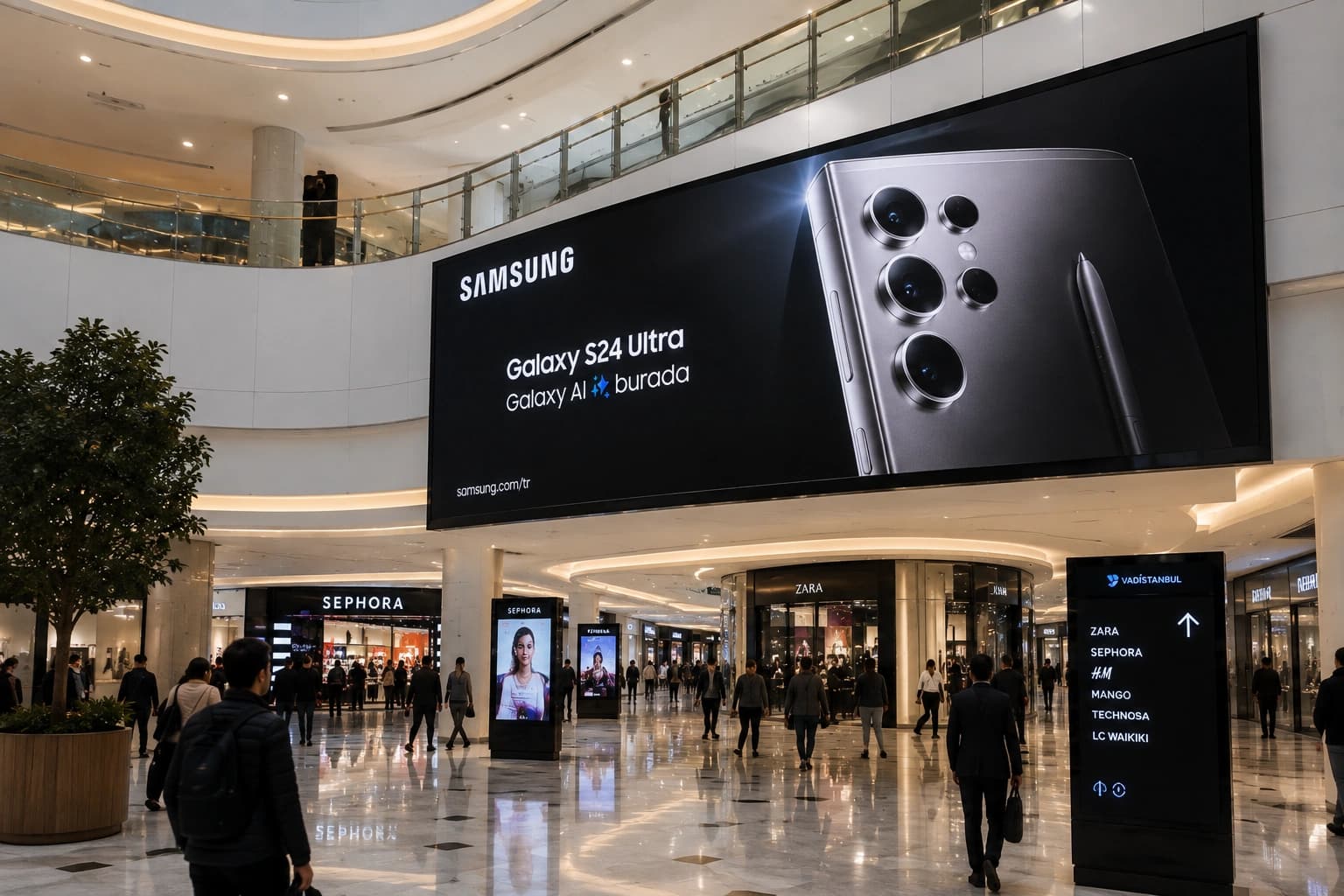
In an LED system the image is formed by combining LED modules. There are no conventional screen bezels, so the result is a far more continuous, seamless image. LED screens are used in corporate lobbies, stores, showrooms, shopping malls, event spaces, façade applications and conference halls. Thanks to the modular structure they are not limited to a standard rectangle — they can be built in many sizes and architectural forms.
The Biggest Difference: The Seam
The most visible difference between a video wall and an LED screen is the join. Professional video-wall panels can have very narrow bezels, but they never disappear completely; placed side by side they create horizontal and vertical lines across the image, which is particularly disruptive for large video or brand content. On an LED screen the modules combine into a single surface. For spaces where visual impact and brand communication matter, LED has a clear advantage.
Which Gives Better Image Quality?
There is no single answer. For small and medium applications viewed from close range, professional LCD panels offer very high image quality; their high pixel density keeps text and fine detail sharp. On LED screens, image quality depends largely on pixel pitch: professional indoor LED with a fine pitch can deliver excellent quality at short viewing distances, though at a higher cost. So image quality should be judged not by technology alone but by viewing distance, screen size, content type, pixel pitch and ambient light.
Which Wins at Large Scale?
The larger the screen, the clearer the LED advantage. Building a big surface from a video wall means more LCD panels, and more panels mean more seams: a 4x4 video wall of 16 screens puts a lot of horizontal and vertical lines across the image. An LED screen keeps its surface continuous however large it grows. For wide corporate lobbies, event stages and large retail applications, LED is usually the preferred technology.
Which Is Stronger on Brightness?
High brightness is one of LED’s key advantages, especially in spaces flooded with daylight. Video-wall panels provide enough brightness for interior use but can reach their limits in very bright rooms or where direct sunlight falls on the screen. In atriums, shop windows and high-light architectural spaces, brightness becomes a decisive criterion. Outdoors, LED is by far the more natural choice.
Which Suits Close-Up Viewing Better?
When users stand very close, pixel density matters. LCD-based video walls can look extremely sharp at short range thanks to their high pixel density, while on LED screens the pixels may be noticeable if the pitch is not fine enough. For an operations centre where people work a couple of metres from the wall, a video wall can be a sensible option. That said, fine-pitch LED has narrowed the gap considerably, and low-pitch LED solutions are now used in meeting rooms and control centres too.
Which Is More Flexible Architecturally?
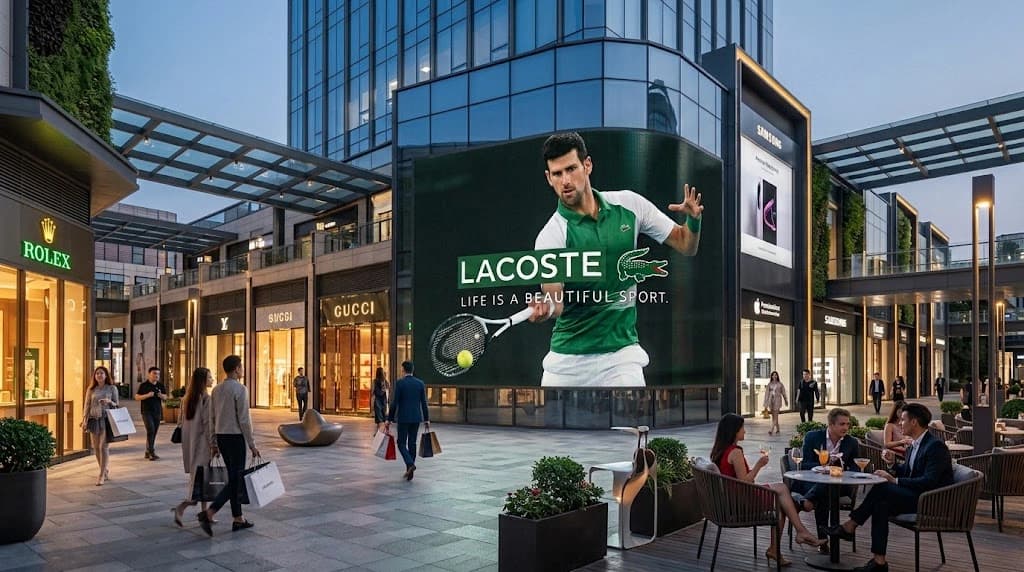
Here LED stands out clearly. Video walls are built from rectangular LCD panels, so the surface is generally a standard geometric grid. The modular nature of LED allows far freer designs: screens that turn corners, curved surfaces, applications wrapping a column, ultra-wide horizontal screens and custom architectural formats. If the screen is meant to be part of the architecture, LED offers much more design freedom.
How Do They Differ on Maintenance?
The maintenance approach differs. In a video wall a faulty panel is usually replaced as a whole, and years later the same model may no longer be available, producing colour or image differences. LED systems are modular: a faulty module or the related electronics can be replaced, which can be an advantage. However, spare LED modules need to be compatible with the original production batch, so professional projects plan spare modules at installation.
Which Consumes More Energy?
Energy use depends on screen size, brightness, operating hours, content and technology, so a blanket claim that “LED uses less” or “video wall uses less” is not reliable; total consumption should be calculated per project. For corporate screens running all day, energy efficiency matters significantly to long-term operating cost.
When Does a Video Wall Make More Sense?
A video wall can be the better option when the user views the screen from close range, when very high pixel density is required, when data, charts or monitoring content is shown, when a standard rectangular format is sufficient, and when the project is small or medium in scale. That is why video walls remain a strong alternative in security operations centres and some control rooms.
“Video wall and LED screen look like direct alternatives but answer different needs. The right question is not “which is better?” but “which is right for this project?”.”
When Does an LED Screen Make More Sense?
LED is usually the better answer when a wide display surface is needed, when a seamless image is required, when high brightness matters, when the screen is to be integrated into the architecture, when a custom size or shape is wanted, and when brand and advertising content is central. In corporate lobbies and retail, a bezel-free surface makes a striking difference.
Which Is Cheaper?
Initial investment depends on project detail. For small applications a video wall can be more economical, but as the surface grows the number of panels and the video-wall processing infrastructure push costs up. LED cost depends on pixel pitch, screen size, LED quality, the control system and the mechanical installation. Deciding on price per square metre alone is a mistake; evaluate total cost of ownership.
Ask These Five Questions Before Deciding
Before choosing between a video wall and an LED screen, answer these: from what distance will the screen be viewed? What will the total size be? How important is a seamless image? What is the light level in the space? What type of content will be shown? These five questions alone usually reveal which technology the project leans towards.
Not the Best Technology — the Right One
Video wall and LED screen look like direct alternatives, but they are two display solutions answering different needs. In some projects a video wall is the smarter choice; in others LED gives a far better result. What matters is not deciding on a technology in advance but analysing the usage scenario properly. At iDisplay we assess viewing distance, content type, screen size, architecture and operating conditions together to determine the right LED or video-wall solution. The goal is not simply a large display surface, but a system that works correctly, looks right and stays sustainable in its space.
What is the main difference between a video wall and an LED screen?
A video wall is built from several LCD panels. An LED screen is a seamless display surface built from LED modules.
Do LED screens have bezels?
Direct View LED screens have no conventional LCD bezel. The modules combine into a single continuous image.
Which looks sharper, a video wall or an LED screen?
At close range a video wall can offer high pixel density. Fine-pitch LED screens also deliver high image quality at low pitch values. The right option depends on viewing distance.
LED screen or video wall for a corporate lobby?
If you want a large, seamless image that integrates with the architecture, an LED screen is usually the better fit for a corporate lobby.
Can LED screens be used in a control room?
Yes. Fine-pitch LED solutions are used in control rooms and operations centres. The viewing distance and the amount of data to be displayed should be assessed for each project.