Is the TV in a Hotel Room Only for Channels?
To most guests the television in a hotel room looks like an ordinary screen. With the right system behind it, it stops being a device that shows channels and becomes a digital communication point: it greets the guest, presents the hotel’s services, shows restaurant and spa information, announces offers and can deliver room-specific content. That is exactly the difference hotel TV — or hospitality TV — systems make. Many hotels still treat in-room televisions as standalone devices, when a centrally managed professional hotel TV infrastructure can noticeably improve both the guest experience and the hotel’s operational control.
What Is a Hotel TV System?
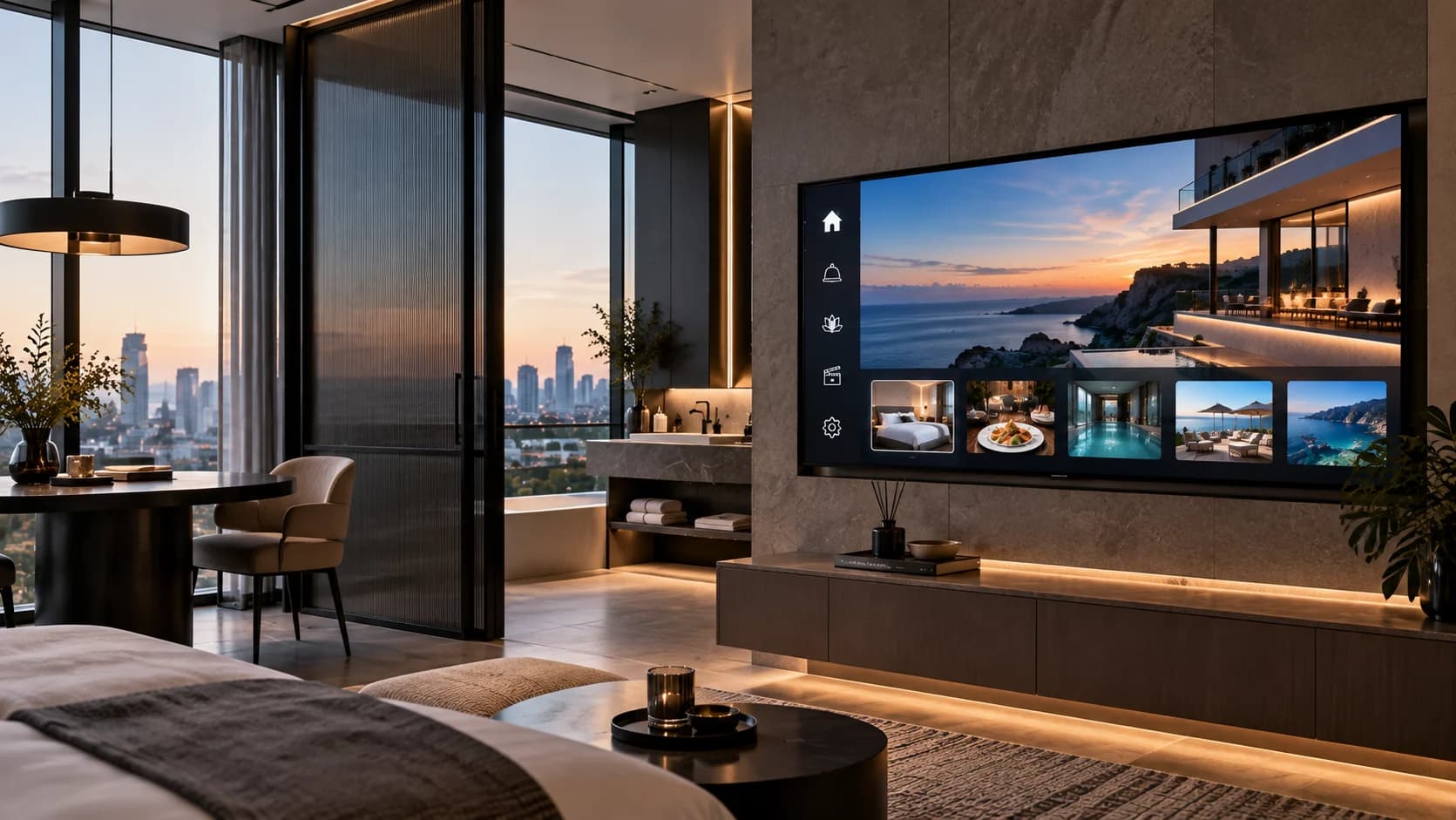
A hotel TV system is a professional display infrastructure in which in-room televisions are managed centrally and work as part of the hotel’s digital services rather than simply showing broadcasts. Management can control what appears on screens in different rooms, create welcome screens and present hotel services directly through the in-room television. In professional hospitality TV systems the screen can show TV channels, greet the guest by name, present hotel services, show restaurant and bar information, display spa and wellness offerings, announce events, show room-service information, provide wayfinding inside the hotel and publish campaigns and promotions. A hotel TV system is therefore not only broadcast infrastructure but the hotel’s digital communication channel inside the room.
How Does Hospitality TV Differ From a Normal Television?
Domestic televisions are designed for personal use; hospitality TV systems are built for hotel operations. The most important difference is central management. Consider a hotel with hundreds of rooms: configuring every television individually or changing content by hand creates a serious operational load. In professional systems, display settings and certain content can be managed centrally, which makes a consistent experience across rooms possible. Hospitality TV devices also offer control and security features specific to hotel use.
What Does the First Screen Say When the Guest Walks In?
Small details shape the hotel experience. A guest who switches the television on and meets a standard channel screen has a very different impression from one who sees a personalised welcome designed in the hotel’s own identity. In professional hotel TV systems the entry screen can be designed around the hotel’s visual identity: a welcome message, guest information, the weather, hotel services, restaurant hours or event details. That small touch makes the in-room screen part of the brand experience.
How Do You Make Hotel Services More Visible?
Many hotels offer a spa, restaurants, transfers and other extras, yet guests are often unaware of all of them. The in-room television is a strong channel here: it can show photographs of the restaurant, introduce spa treatments, announce evening events and present airport transfer options. The guest can explore everything the hotel offers without leaving the room. That is valuable not only for information but for additional revenue, since a service nobody sees is far less likely to be booked.
Can Hotel TV Become a Sales Channel?
Used properly, yes. Hospitality TV systems can support in-hotel sales directly or indirectly: information about restaurant reservations, spa packages, room upgrade options, late check-out and special campaigns can all appear on screen. The aim is not to turn the television into an aggressive advertising space but to make the services a guest may need visible at the right moment. A well-designed interface keeps the balance between information and selling.
How Does Central Management Simplify Operations?
Central management is one of the biggest advantages of professional hotel TV infrastructure. Large hotels can have hundreds of televisions, and controlling each one individually is not sustainable. Central management allows display settings and content structures to be handled in a controlled way: room screens can be standardised, content updated centrally, brand consistency maintained and manual intervention reduced. For hotel chains this matters even more, because a similar guest experience can be created across locations.
Are IPTV and Hotel TV the Same Thing?
The two terms are often used together but are not identical. IPTV is the technology that distributes television broadcasts over an IP network; a hotel TV system describes a wider structure. A hospitality TV infrastructure may use IPTV, but the system is not limited to broadcast distribution. A hotel TV solution also covers the user interface, central management, hotel information screens, welcome content and various service integrations. IPTV can be one part of a professional hotel TV infrastructure.
Why Does the Interface Matter So Much?
A technically strong system can still feel weak because of a poor interface. If the guest is met with complicated menus, the system will go unused. A hotel TV interface should be as simple and clear as possible, letting the guest reach what they want within seconds. The home screen might carry sections such as TV, Hotel Services, Restaurant, Spa, Room Service, About the Hotel and a City Guide — but the menu should be tailored to the services the hotel actually offers. No two hotels need the same interface.
Can Brand Identity Extend to the TV Screen?
Absolutely. However strong the physical design of the room, a completely generic interface on the television weakens the brand experience. In professional hospitality TV systems the interface can be customised with the hotel’s logo, corporate colours, typography, photography and brand language, so the television becomes a digital part of the room design. In premium hotels the look of the screen can matter as much as the design of the room itself.
Why Is Multi-Language Content Important?
For hotels hosting international guests, language options are essential. If a guest cannot understand the hotel’s services, most of the system’s benefit is lost. Professional hotel TV systems can present content in several languages, letting guests select their own and follow hotel information, restaurant menus, service descriptions and important announcements comfortably. In tourist destinations and international hotels, multi-language support directly shapes the guest experience.
“The difference is not the size or the brand of the television; it is how properly the screen has been made part of the hotel experience.”
Can a Hotel TV System Integrate With the PMS?
Depending on the infrastructure, hospitality TV systems can work with the hotel’s other software. PMS (Property Management System) integration allows certain guest details to flow into the television interface, enabling personalised welcome messages and similar applications. In more advanced projects other hotel services can connect to the same digital infrastructure. Integration needs differ from project to project, so the hotel’s existing software landscape should be analysed at the very start.
Screen Position and Size Matter Too
A hotel TV project is not only software; the physical position of the screen shapes the guest experience as well. Viewing angle from the bed, screen size, mounting height, the relationship with the wall and the overall room design all have to be considered together. A screen that is too small looks weak in a premium room, while one that is too large dominates the design. Screen selection should follow room type and viewing distance — standard rooms, suites and residence-style accommodation often call for different sizes.
What Should You Consider When Choosing a Hotel TV System?
A hospitality TV project should not be decided on the television model alone; evaluate the whole system. The key questions are: how many rooms does the hotel have? How many room types? How will TV broadcasts be distributed? Will IPTV infrastructure be used? Is central management required? Will the interface be customised? How many languages are needed? Is PMS integration required? Will in-hotel services be shown on screen? Can the system be expanded later? How will technical support be provided? These questions define the real scope of the project.
The Hotel TV Is Not a Small Detail
A guest meets relatively few digital touchpoints in a hotel room, which makes the television an important communication surface. Planned properly it stops being a device for watching channels and becomes a system that welcomes the guest, explains the hotel’s services, supports brand communication and can be managed centrally. The difference is not the size or brand of the television but how properly the screen has been made part of the hotel experience. At iDisplay we evaluate every component of hotel TV and hospitality projects together — display infrastructure, central management systems, IPTV solutions, interface design and integration needs — to build scalable, manageable display solutions that match the hotel’s operations, room types and guest-experience goals.
What is a hotel TV system?
A hotel TV system is a professional display infrastructure that allows in-room televisions to be managed centrally and to present hotel services, information and personalised content alongside TV channels.
What is the difference between hospitality TV and a normal television?
Hospitality TV devices are designed around hotel needs such as central management, control and integration with other systems. Standard home televisions are built for individual use.
What is IPTV?
IPTV is the technology that delivers television broadcasts over an IP network. In hotels it can be used for professional TV distribution.
Can a hotel TV system be managed centrally?
Yes. Depending on the infrastructure, screens in different rooms and certain content can be managed through a central system.
Can a hotel TV system integrate with a PMS?
With compatible systems, PMS integration is possible, enabling use cases such as guest information on screen or personalised welcome messages.