What Is Digital Signage? More Than a Screen
The screen behind the till in a store, the wayfinding panel in a hotel, the information display at the entrance of a corporate building — at first glance these look like devices that simply show pictures. Set up properly, each of them is part of a dynamic communication channel managed from one place; that structure is called digital signage. The real power is not the screen, it is the ability to control when, where, on which screen and for which audience the content appears. Digital signage is therefore not televisions hung on a wall: it is an integrated digital communication system where content management, display infrastructure, software, network and operations work together.
1. You Manage All Content From One Place
A business with multiple branches shows different campaigns, prices and information in each store. If that content is updated with USB sticks or by hand, even a small change turns into a serious operational burden. With a digital signage content management system, screens across locations are run from one panel: a new campaign can go live, existing content can be pulled, screen groups can be created, different content can be assigned to different locations and publishing dates can be scheduled. A campaign running in Istanbul stores need not appear in Ankara, and content for one specific group of stores can go live in seconds. For multi-branch brands this is a significant operational advantage.
2. You Do Not Have to Walk Up to the Screen to Change It
In traditional print communication, a campaign change means new artwork has to be designed, printed and shipped to each branch. With digital signage, new content is prepared and sent straight to the screens. The difference sounds small but is decisive across hundreds of screens: a price change or a new announcement can be updated everywhere within minutes. Content can also be prepared in advance and published automatically at set dates and times. In a restaurant chain the screens can show the breakfast menu in the morning, different campaigns at midday and other products in the evening, all automatically. That does not only speed up content management — it makes communication more relevant to the moment.
3. The Same Screen Can Do Several Jobs in One Day
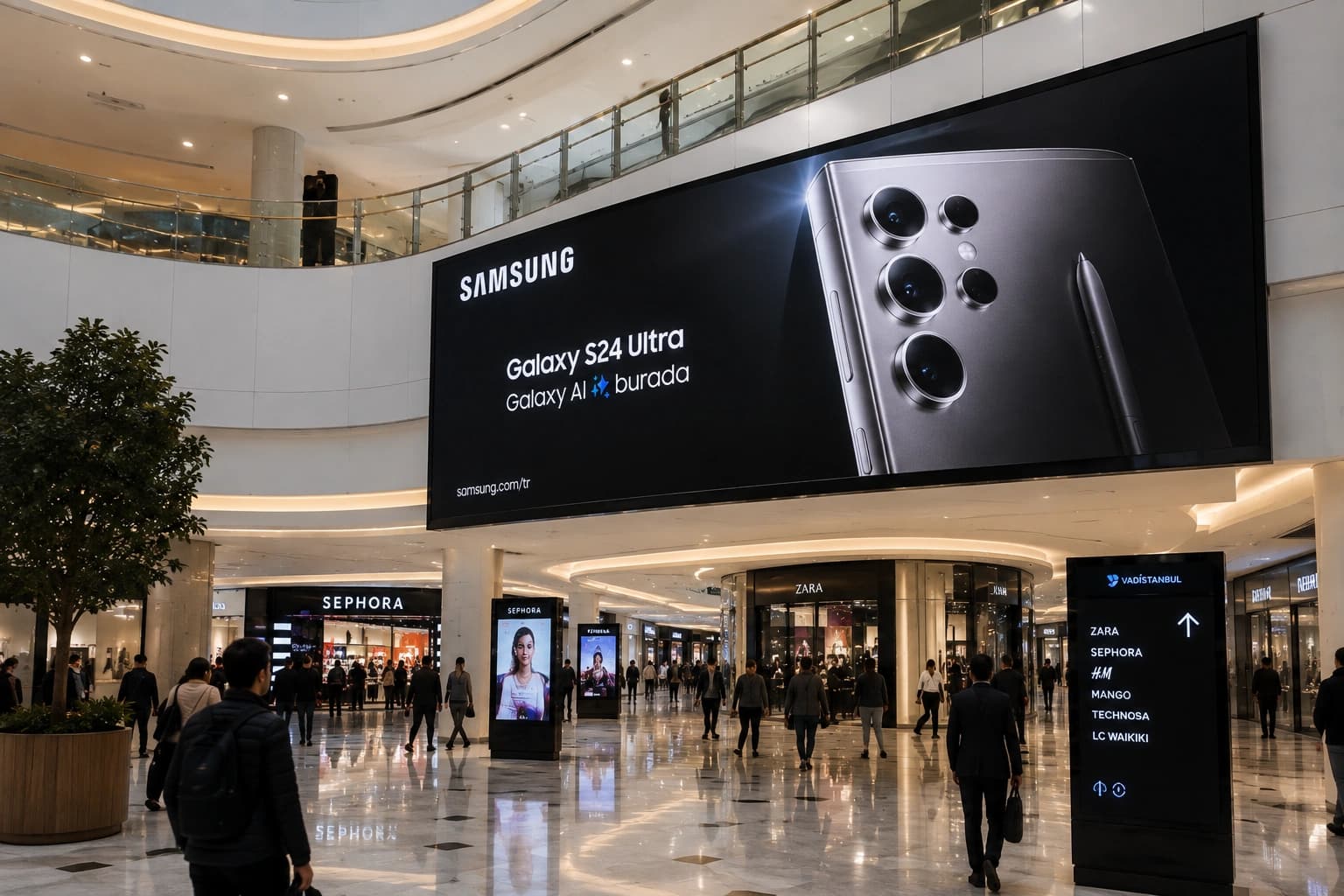
A printed poster carries one message; a digital signage screen can carry dozens through the day. That lets businesses use their physical space far more efficiently. A screen in a shopping mall can serve as wayfinding in the morning, show campaigns in the afternoon, and publish event announcements or urgent notices at particular times. With the right content strategy a single screen becomes advertising space, information display, wayfinding system, corporate communication channel and campaign screen at once. The floor area stays the same; the communication capacity grows.
4. You Can Change Content by Location
No two stores, hotels or corporate spaces have identical needs. One of the key advantages of digital signage is grouping screens so each location gets its own playlist. A retail brand may have the same screen infrastructure in Istanbul, Izmir and Antalya, yet show seasonal summer campaigns in Antalya while promoting different products in Istanbul. In a hotel, the lobby can show brand and event content, the restaurant its menus, the meeting-room floor its event schedule and the lift areas wayfinding messages. The technology is identical; the role of the screen changes with its position. A well-planned project treats screens not individually, but according to the communication need of the space they sit in.
5. It Keeps Brand Communication Consistent
One of the most common problems in multi-location businesses is losing control of brand communication. One store still shows last month’s campaign while another uses a different layout, and some locations never update on time — so the brand looks inconsistent at its physical touchpoints. Centrally managed digital signage largely removes that problem: content approved at head office goes straight to the screens, so brand language, visual identity and campaign messages stay under control. In multi-branch retail, banking, telecoms, automotive and services this control is a serious advantage, because every physical point where the customer meets the brand can hold the same standard.
6. Digital Signage Is Not Only for Advertising
Digital signage is usually associated with advertising screens, but the use cases are far wider. Company announcements and performance data in corporate buildings, operational information on production sites, wayfinding and queue information in hospitals, event schedules and welcome screens in hotels, campus announcements, digital menus in restaurants, product and campaign content in stores — all of it can be run from the same system. Success is therefore not measured by the number of screens but by how well the use cases are defined. Before any technology decision, ask: “what information do we want to give the user at this point?”
How Does a Digital Signage System Work?
A digital signage system has a few core components. The display is the professional panel, LED screen or other device that shows the content. The media player is the hardware that runs the content, and in some professional displays it is built into the screen itself. The content management system (CMS) is the software where users upload content, group screens, build schedules and manage locations. The network connects the screens to the central system, over the internet or the corporate network depending on the model. Working together, these turn the screens into a communication network that can be managed remotely.
Are Digital Signage and LED Screens the Same Thing?
The two are often confused. An LED screen is a display technology; digital signage is a broader system. A digital signage project may use LED screens, professional LCD displays or other display technologies. Put simply: the LED screen is the hardware that shows the image, while digital signage is the structure that decides what is shown on it, when and how. In many projects the two are used together.
Where Is Digital Signage Used?
Digital signage is used across many sectors. In retail, for in-store campaigns, product information, pricing and brand communication; in shopping malls, for wayfinding, event announcements and advertising; in hotels, for lobby screens, meeting-room signage, event schedules and welcome displays; in corporate offices, for announcements, KPI dashboards and visitor welcome; in banks, for product and service communication, queue systems and campaigns; in restaurants and QSR, for digital menu boards and dynamic pricing; in airports, terminals and stations, for wayfinding and passenger information. The applications differ, but the goal is the same: the right content, in the right place, at the right time.
“The power of digital signage comes not from the screen itself, but from being able to manage centrally when, where, on which screen and to which audience the content appears.”
What Is the Most Common Mistake in a Digital Signage Project?
The most common mistake is starting the project by buying screens. Models are chosen, devices are mounted, and only then does someone ask “what are we going to show on these?”. The process should run the other way round: start with the communication goal. Who will see it? Where? How long will they look? What content will play? How often will it change? How many locations will be managed? Once those are answered, choosing displays, media players and software becomes far more reliable — because a digital signage project is decided as much by content and operating model as by screen specifications.
What Should You Watch for When Investing in Digital Signage?
A signage system should be specified not only for today’s needs but for how it will grow. A system that starts with 10 screens can reach 100 within a few years, so the infrastructure has to scale. The main points to evaluate are: the purpose of the screens, the number of locations, display type and sizes, how often content changes, the need for central management, user permissions, network infrastructure, remote monitoring, technical support and maintenance, and whether the system can be expanded later. Planned well, digital signage turns a set of individual screens into a powerful, centrally managed communication infrastructure.
Hanging a Screen Is Easy; Building the Right System Is Not
The value of digital signage does not come from the physical screens alone — it comes from screens, software, content and operations working together. A well-planned system lets businesses update content faster, manage multiple locations centrally and make communication in their physical spaces far more dynamic. A successful project therefore starts not with “which screen should we use?” but with “what kind of communication network do we want to build with these screens?”. At iDisplay we evaluate every component together — display and hardware selection, content management infrastructure, system integration, central management and technical support — and build solutions that scale with the need, allow locations to be managed from one place and remain sustainable over time.
What is digital signage?
Digital signage is a digital communication solution that lets visual, video, information and advertising content on digital screens be managed through a central system.
What components make up a digital signage system?
Typically a professional display, a media player, a content management system and the network infrastructure. Additional software and integrations can be added as the project requires.
Can digital signage content be changed remotely?
Yes. Central content management systems let you push content to screens in different locations remotely and build publishing schedules.
What is the difference between an LED screen and digital signage?
An LED screen is a display technology. Digital signage is the wider system in which screens work together with content, software and management infrastructure.
Which sectors use digital signage?
Retail, shopping malls, hotels, restaurants, banking, corporate offices, healthcare, education and transport all use it for advertising, information, wayfinding and corporate communication.