Does a Screen in a Store Increase Sales?
Putting a large screen in a store is easy; making that screen genuinely useful is not. The most common mistake in digital signage is treating the screen itself as the solution. However good the display, if it sits in the wrong place, shows the wrong content or has no connection to the moment of decision, it will not deliver. The question in retail signage projects is not “how many screens should we install?” but “when, where and why will the customer see this screen?”. Answer that and the screen stops being decoration and becomes an active part of the sales process.
What Is In-Store Digital Signage?
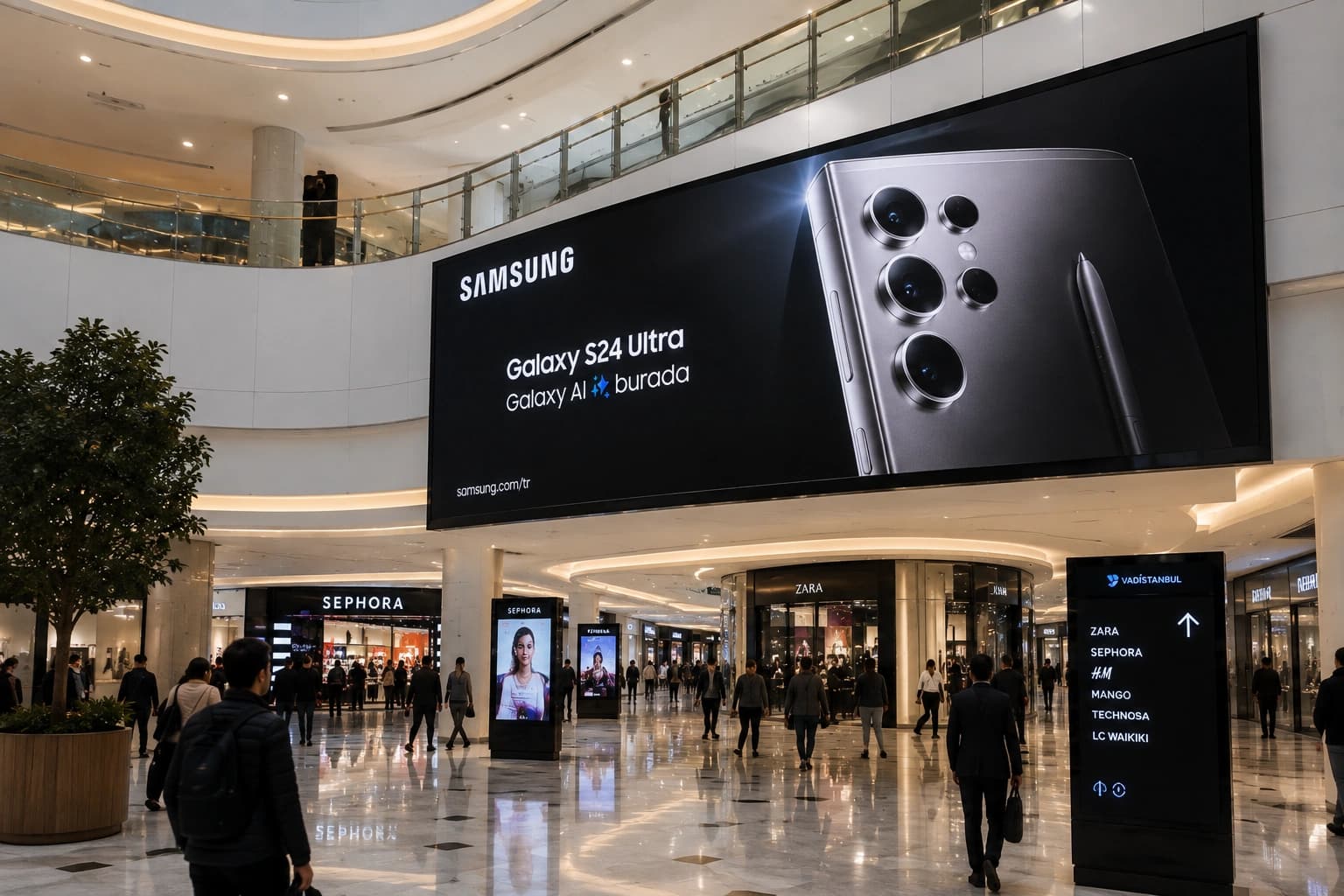
In-store digital signage is the general name for digital display systems used to present products, campaigns, pricing, wayfinding or brand communication to customers. Professional displays, LED screens or other display technologies can all be used; the essential difference is that content is managed centrally. A retail brand can publish a new-season campaign, specific product groups, price advantages, a loyalty programme and brand content across dozens of stores at once, and change it within minutes. That flexibility is a major advantage over print.
A Big Screen Is Not Enough
As screens spread through retail, it is assumed that a bigger screen attracts more attention. That is true up to a point, but size alone does not guarantee communication success. A screen outside the customer’s natural line of sight will not achieve much however large it is. The screen at the entrance and the screen behind the till should not do the same job: the entrance screen draws people in, the screen in the product area supports the purchase decision, and the screen near the till communicates add-ons or the loyalty programme. The role of each screen is set by where it sits.
Where Is the Moment of Decision?
One of the most important points in retail signage is identifying when customers decide. A customer entering the store may not yet know what they want; at the shelf they start comparing options; by the till the main decision is largely made. Showing the same content at all three points is wrong. A broad message such as “new collection” works at the entrance, while near the product, features, styling suggestions, price advantage and stock or campaign information become more valuable; close to the till, accessories, loyalty membership and additional offers are relevant. Signage content should therefore be planned around the customer journey.
Does a Screen Replace a Salesperson?
No — but used well it supports the sales team. In stores with wide product ranges, customers do not always want to ask for help. Signage screens can present the basics quickly: product features, use cases, colour options, campaign detail and complementary products. That frees the sales team to focus on more detailed questions. The screen does not replace the salesperson; it speeds up access to information.
A Screen Without Fresh Content Disappears Fast
The first time a large screen goes into a store it easily attracts attention — but if the same loop keeps playing, it soon becomes part of the furniture and customers stop noticing it. One of the strengths of digital signage is that content can be changed regularly: the screen should change when a new season arrives, the message should change when a campaign starts, and content should adapt if the customer profile changes through the day. Weekday lunchtime shoppers are not the same as Saturday-evening shoppers, and content planning can reflect that.
Is Showing a Product Photo Enough?
The most common content model on store screens is very simple: a large product photograph, a logo and a discount figure. That works in some cases, but using every screen the same way limits what signage can do. A screen can show motion, demonstrate how a product is used, compare models, show close-up detail and tell the brand’s story. The advantage of digital content is not only that it is digital — it is that it can move and change.
How Long Should the Content Be?
It is a mistake to assume a customer will watch a screen for minutes; in most cases a screen captures a few seconds of attention, so the message has to land quickly. Long paragraphs, small type and too much information rarely work. On screens viewed from a distance especially, a short headline, a strong image, high contrast and one main message perform better. A larger screen does not call for more complex content — on large formats, simple content usually looks stronger.
Does Digital Signage Make Sense in a Shop Window?
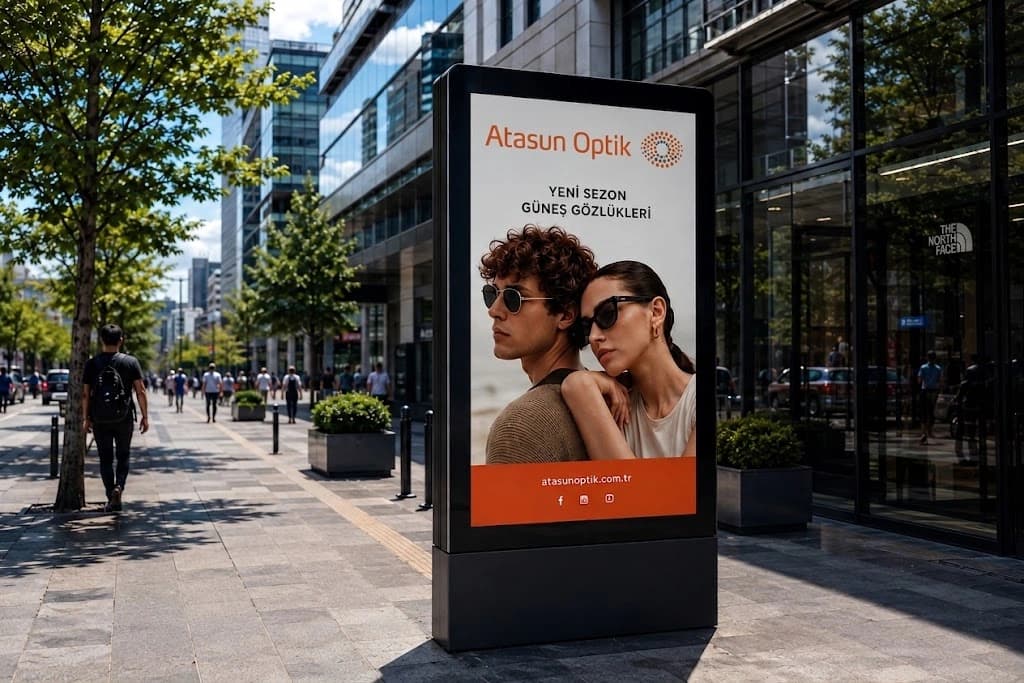
Window screens let a store communicate with people outside, but the technical conditions are harder. A screen that is perfectly adequate indoors can become invisible in a sunlit window. Brightness, reflection, direct sun, screen position and viewing angle all need particular attention. In bright locations a high-brightness professional display or LED screen may be necessary — because if even the best content cannot be seen, the communication value drops to zero.
LED Screen or Professional Display?
The display technology depends on the project. In smaller areas, standard-size professional displays can be enough; where a very large surface, a custom size, high brightness, a seamless image or architectural integration is required, LED becomes the stronger option. A large display surface covering a store’s back wall suggests LED, while smaller information screens beside the shelves are better served by professional LCD. Trying to solve a whole store with one technology is the wrong approach.
Why Is Signage Even More Valuable for Multi-Branch Brands?
Imagine a brand with 50 or 100 stores. Every campaign change means new printed material to produce, ship and swap at the right moment — and in that process old campaigns linger in some stores, the wrong artwork gets used, or new material arrives late. With central signage infrastructure, content is controlled from one point: if a campaign starts at 10:00 on Monday it can go live on the relevant screens in every store simultaneously, and be removed automatically when it ends. That consistency is a serious gain for brand communication.
Do You Have to Show the Same Content Everywhere?
No. One of the advantages of digital signage is that screens can be grouped. Istanbul stores, mall stores, high-street stores, premium stores and outlets can each form their own group, so campaigns can be published only where they are relevant. Different screens within the same store can also carry different roles. For large retail operations this flexibility makes communication far more targeted.
“The real strength of digital signage is making the information that can influence a purchase visible at the right moment. The effect on sales comes from how the screen is used, not from its presence.”
What Is the Most Common Mistake With Store Screens?
The biggest mistake is leaving the screen to the end of the project. The store’s architecture is finished, the fixtures are installed, the lighting is designed — and then someone tries to fit a screen onto an empty wall. The result always looks added on. If signage is considered from the beginning of the architectural project, screen size, position, power, data connection and service access can all be planned in advance, and the result is far cleaner both technically and visually.
So, Does Digital Signage Increase Sales?
Quoting a single percentage, or claiming that sales will certainly rise once a screen goes up, would be wrong: the outcome depends on store type, product category, screen position, the content shown, the campaign structure and customer behaviour. The real strength of digital signage is making information that can influence a purchase visible at the right moment. With the right content and placement, a screen helps products get noticed, campaigns be understood, options be compared and add-ons be discovered. The effect on sales comes from how the screen is used, not from the fact that it exists.
Where Does a Good Retail Signage Project Start?
Not with a product catalogue, but with the customer journey. First answer: where does the customer enter? What do they look at first? Where do they decide? Where do they wait? Which products need more explanation? How often do campaigns change? How many stores will be managed centrally? What content will appear on which screens? Only once those answers exist should the display technology and content infrastructure be chosen.
Design the Customer Journey, Not the Screen
For in-store signage to work, the technology has to align with how customers actually move. If the screen is in the wrong place it will not be noticed; if the content is wrong the message will not land; if the management infrastructure is wrong the system quickly becomes an operational burden. A successful retail signage project therefore starts not with buying screens but with understanding the customer journey through the store. At iDisplay we evaluate professional displays, LED screens and signage infrastructure alongside the store’s architecture and communication needs, planning everything from screen placement to central content management so brands can turn their physical spaces into more dynamic, manageable communication points.
What is in-store digital signage?
In-store digital signage is a communication system in which campaign, product, price and brand content is shown on digital screens and managed centrally.
Does digital signage increase sales?
The outcome depends on screen position, content strategy and customer behaviour. Planned well, it increases the visibility of products and campaigns and can support the purchase decision.
LED or LCD screens in a store?
It depends on the application. LED suits large, custom-size or seamless surfaces; professional LCD displays suit smaller, standard applications.
Can signage content be changed remotely?
Yes. Central content management systems let store screens be updated remotely and publishing schedules to be created.
Where should a store screen be placed?
Placement should follow customer flow and the communication goal. The entrance, product areas, waiting points and the till area each serve different purposes.